
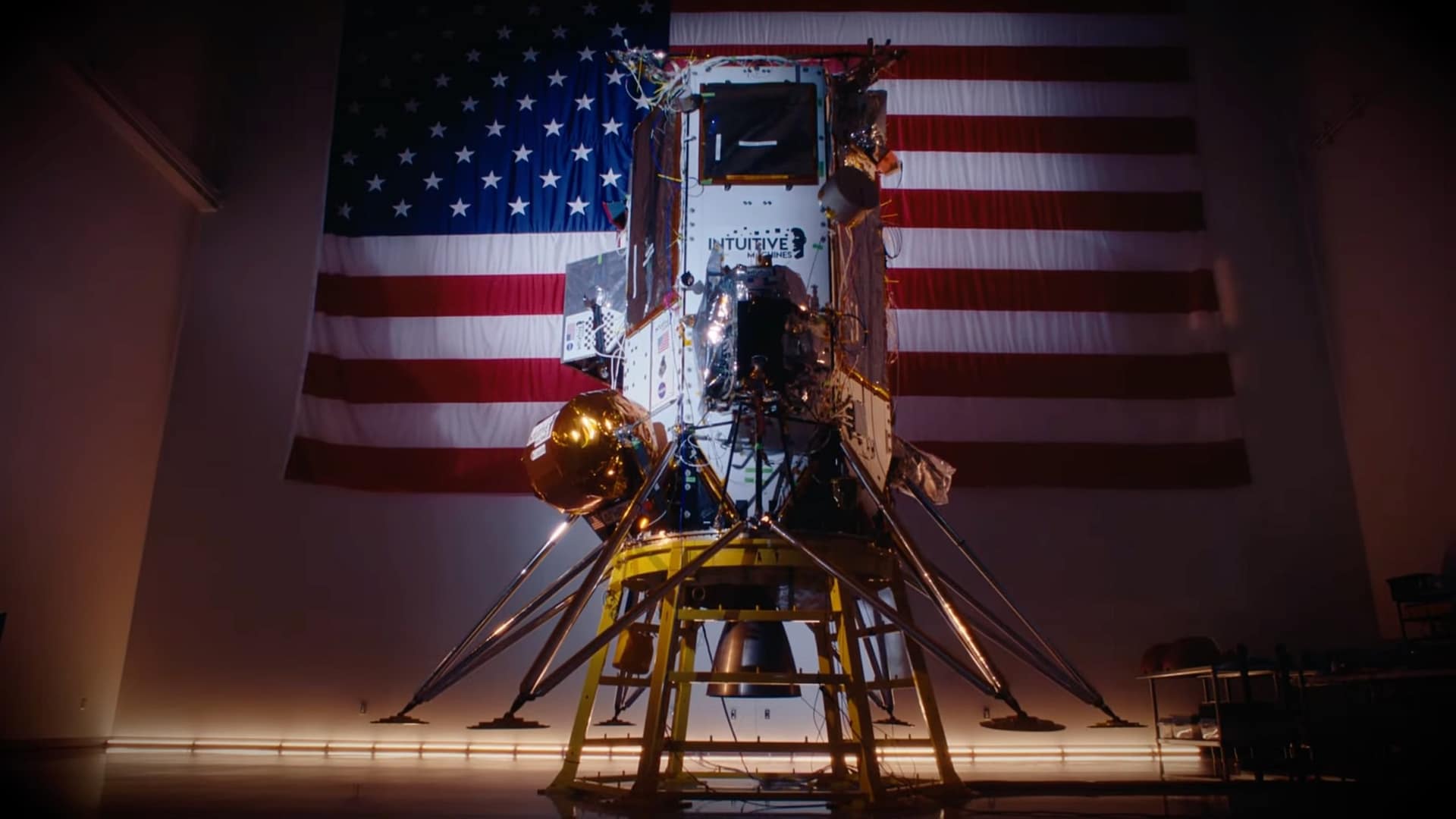
When we look to the stars, we often think of scientific discovery, human exploration, and the awe-inspiring images sent back from distant worlds. The public perception of government space projects is understandably focused on these monumental achievements. Yet, behind the headlines of rover landings and rocket launches lies a powerful, yet often overlooked, role as a potent catalyst for national economic growth. Government investment in space is not merely a cost center for scientific inquiry; it is a high-yield investment in America’s future prosperity.
Drawing on data from the comprehensive 2023 NASA Economic Impact Study, this analysis will reveal how government investment in space acts as a powerful economic multiplier. It fosters the creation of high-wage jobs, drives innovation across a multitude of industries, and systematically builds the foundation for a robust and self-sustaining commercial space economy. By examining NASA’s overall economic footprint and taking a closer look at specific programs like the ambitious Moon to Mars campaign and critical climate change research, we can quantify the tangible returns of reaching for the cosmos.
——————————————————————————–
1. The National Impact: Quantifying NASA’s Economic Footprint
To understand the impact of individual space projects, it is crucial to first grasp the total economic contribution of the parent agency. The activities of the National Aeronautics and Space Administration (NASA) create a significant and far-reaching ripple effect across the entire U.S. economy. In Fiscal Year 2023, the agency’s work generated substantial economic activity, supporting jobs and industries far beyond its own gates.
According to the study, NASA’s national economic impact is a testament to its role as a broad-based economic driver. The top-line figures for FY 2023 include:
- Total Economic Output: An estimated $75.6 billion generated annually throughout the U.S. economy.
- Jobs Supported: A total of 304,803 jobs sustained across the United States.
- Labor Income Generated: An annual contribution of $27.6 billion in wages and benefits.
- Tax Revenue Generated: Approximately $9.6 billion in annual tax revenues for federal, state, and local governments.
These impressive figures tell only part of the story. A closer analysis reveals the high-quality nature of this economic activity, which sets it apart from other forms of government spending.
- High-Value Jobs: The jobs supported by NASA are not just numerous; they are exceptionally high-paying. While the average NASA-supported job pays 90,547 (24% above the U.S. average), the compensation for the agency’s own civil servants is even more striking. The average labor income for a NASA civil servant is **197,283**, a figure that is 269% of the U.S. average ($73,416). This starkly illustrates the highly skilled, high-value nature of the talent at the core of the nation’s space enterprise.
- The Multiplier Effect: NASA’s spending creates a powerful ripple effect that magnifies its initial investment. The study reveals that for every one civil service job located at a NASA facility, at least 16 additional jobs are supported throughout the U.S. economy. To make this tangible, the study shows that for each million dollars of labor income earned by NASA employees, an additional 6.8 million** of labor income is generated nationwide. For each million dollars’ worth of output produced by NASA, an additional **8 million of output is generated. This exceptionally strong multiplier is boosted by the large volume of procurement spending, where the agency contracts with private firms, academic institutions, and other government entities to achieve its mission goals.
This massive national impact is not an abstract phenomenon; it is the direct result of specific, mission-oriented campaigns that serve as focused engines of growth and innovation.
——————————————————————————–
2. Case Study: The Moon to Mars (M2M) Campaign as an Economic Catalyst
The Moon to Mars (M2M) campaign, which includes the Artemis program to return to the Moon and preparations for the human exploration of Mars, serves as a prime example of a flagship government-led space initiative. It is a project of immense scientific and strategic importance, designed to establish a sustainable human presence on the lunar surface. However, it is equally important to view M2M as a focused economic development program, channeling public investment into the private sector to build next-generation capabilities.
The economic contributions of the M2M campaign are substantial, accounting for approximately 32% of NASA’s overall agency impacts. This activity is fueled by a combination of direct federal employment and, more significantly, extensive procurement contracts.
- Direct federal spending for M2M involves 3,749 full-time equivalent (FTE) civil service jobs, paying over $712 million in annual wages and benefits.
- The most significant economic driver is the $7.7 billion in M2M procurement activity. This funding is channeled to U.S. companies, other government agencies, and academic institutions across the country.
This procurement spending is not merely outsourcing; it is the primary strategic tool by which government missions intentionally cultivate the commercial space sector. These multi-billion-dollar contracts support the U.S. aerospace industry and drive innovative solutions in fields including “materials, structures, avionics, software, and analysis techniques.” By creating demand for cutting-edge technology, the M2M campaign directly funds the research, development, and manufacturing that strengthen America’s industrial base. While M2M looks outward to the cosmos, NASA’s investments also have a profound impact on understanding and protecting our home planet.
——————————————————————————–
3. Case Study: Investing in Our Planet Through Space Technology
While often associated with extraterrestrial exploration, government space projects are also essential for addressing our most pressing challenges on Earth. NASA’s investments in climate change research and technology are a critical example of this, leveraging space-based assets and expertise to monitor, understand, and mitigate the effects of a changing climate. This Earth-focused work also functions as a powerful economic driver.
The total economic impact generated by these investments in Fiscal Year 2023 is significant, demonstrating a clear return on public funds.
- Jobs Supported: These activities supported 32,900 jobs nationwide.
- Economic Output: They generated $7.9 billion in annual economic output.
- Labor Income: They contributed $2.9 billion per year in labor income.
- Tax Revenue: An estimated $1 billion was generated in annual tax revenues.
This impact is fueled by direct agency investment, including 2,009 FTEs earning over 382 million** in wages and **2.4 billion in procurement spending. These contracts, awarded to firms, government entities, and academic institutions, bolster U.S. leadership in climate data collection and analysis.
The broader significance of these findings is clear: public investment in space capabilities creates a versatile economic engine. These contracts, as the study notes, “help the U.S. maintain its global leadership role in collecting and disseminating systematic climate data that are increasingly critical to many aspects of life on Earth, from agriculture, to energy, and national security.” This demonstrates how space programs drive growth not just for missions to other worlds, but in sectors vital to a sustainable future here at home. Having established what this economic impact is, it is equally important to understand where it is concentrated.
——————————————————————————–
4. The Ripple Effect: Where the Economic Impact is Concentrated
The economic benefits of government space projects are not abstract national figures dispersed evenly across the country. Instead, they are highly concentrated in specific geographic regions and industrial sectors. Analyzing this data reveals how public investment actively fosters and sustains high-tech, knowledge-intensive ecosystems.
Geographic Concentration
The impact of NASA’s activities is heavily focused in a handful of states that form the backbone of America’s aerospace and technology sectors.
- The top ten most impacted states account for an overwhelming 90% of the total employment impacts.
- These states, in order of impact, are: California, Texas, Florida, Alabama, Maryland, Virginia, Colorado, Ohio, Mississippi, and Washington.
This geographic concentration is not accidental; it is anchored to the physical locations of America’s key space infrastructure. States like California (home to the Jet Propulsion Laboratory and Ames Research Center), Texas (Johnson Space Center), Florida (Kennedy Space Center), and Alabama (Marshall Space Flight Center) are not just recipients of funds—they are the foundational pillars of NASA’s operational and research capabilities. This direct federal presence creates deep-rooted economic ecosystems, attracting a critical mass of private contractors, specialized labor, and academic partners that amplify the initial government investment.
Industrial Concentration
Similarly, the benefits are concentrated in specific, high-value industries. This targeted impact ensures that investment flows into sectors critical for future innovation and competitiveness.
- The single most impacted industrial sector is “Scientific research and development services,” which alone accounts for 19% of total NASA employment impacts.
The strategic implication of these concentrations is profound. Government spending on space projects intentionally fosters and sustains high-tech economic hubs. By channeling billions of dollars in procurement contracts to these key regions and industries, NASA not only accomplishes its missions but also strengthens the nation’s competitive advantage in the global technology landscape. These concentrated hubs of innovation are not merely side effects; they are a core component of a forward-thinking national economic strategy.
——————————————————————————–
5. Conclusion: A Strategic Investment in America’s Future
The data is unequivocal: government space projects, as exemplified by NASA’s activities in 2023, are a profound economic investment, not just a cost. They are a strategic tool for generating widespread prosperity, advancing technological frontiers, and building the industries of tomorrow.
The evidence presented throughout this analysis paints a clear picture. The agency’s work supports hundreds of thousands of high-paying jobs, generates over $75 billion in annual economic output, and produces a powerful multiplier effect that amplifies every dollar invested. This is driven by multi-billion-dollar procurement contracts that directly build the capacity and sophistication of the commercial space industry, preparing it for a future where private enterprise plays an even larger role.
Ultimately, public investment in space is a long-term strategy for securing America’s technological leadership, driving innovation that benefits sectors across the entire economy, and ensuring a prosperous economic future both on Earth and beyond.
Discover more from Pasindu Lakshan Perera
Subscribe to get the latest posts sent to your email.

Related Posts

The Critical Intersection of Space Operations and Global Climate Action

The Hidden Barriers Constraining a Trillion Dollar Economy
