
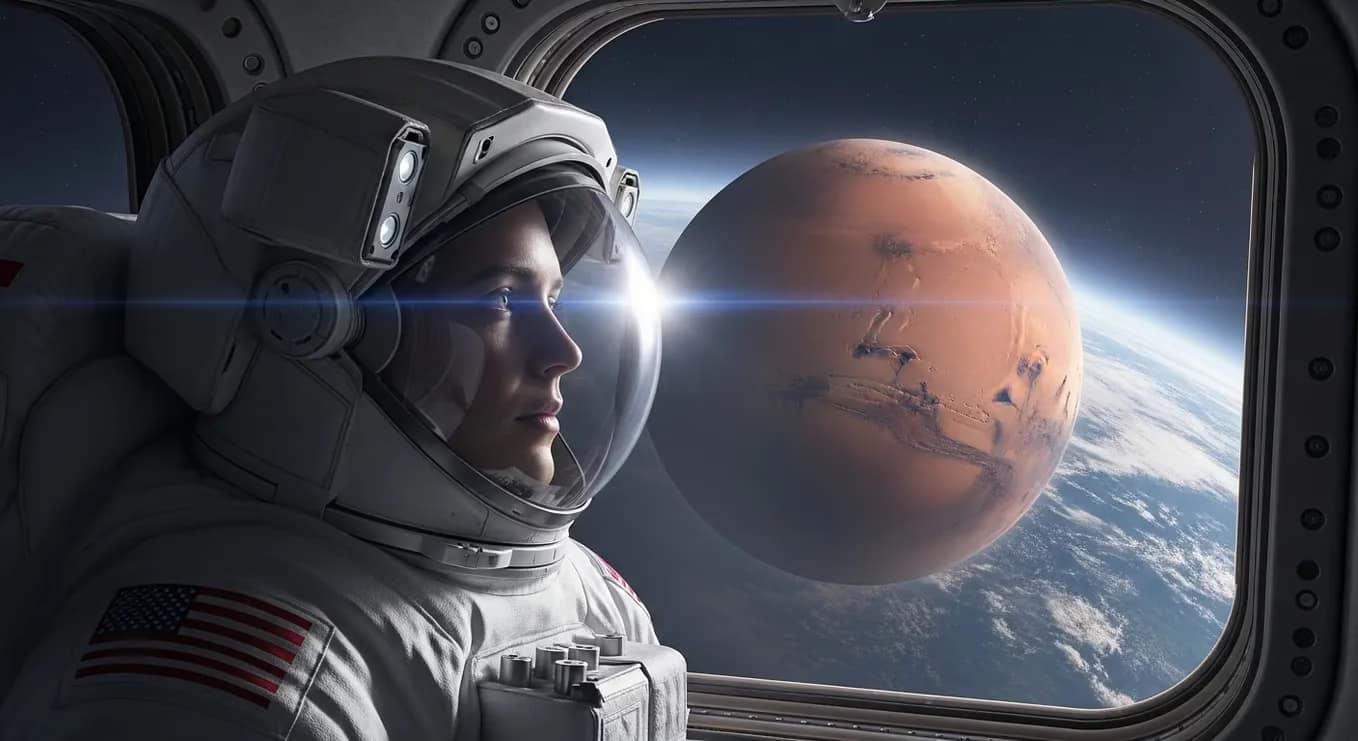
The Dawn of the Commercial Astronaut
When 90-year-old William Shatner returned from his Blue Origin flight, he was overcome. “What you’ve given me is the most profound experience I can imagine,” he said, filled with emotion. “It has to do with the enormity and the quickness and the suddenness of life and death.” His words captured the timeless, almost spiritual allure of space that has captivated humanity for generations. But Shatner’s journey was more than a personal milestone; it was a high-profile signal of a paradigm shift. The final frontier is no longer the exclusive domain of government-backed agencies. A new space race, driven by the commercial ambitions of pioneers like Elon Musk, Richard Branson, and Jeff Bezos, has begun. This burgeoning industry has transformed space travel from a distant dream into a tangible, albeit exclusive, reality. But beyond the celebrity flights and futuristic promises lies a complex ecosystem of economic drivers, environmental externalities, and regulatory vacuums that will define not just the future of tourism, but the next phase of the entire space economy.
——————————————————————————–
1. The New Space Race: Players, Offerings, and Market Trajectory
To understand the future of humanity in space, one must first grasp the commercial landscape taking shape today. Unlike the Cold War-era competition between nations, this new space race is defined by private enterprise, market segmentation, and a powerful economic trajectory. The key players are not just launching rockets; they are building a new sector of the global economy. While suborbital and orbital flights define the current market, their roadmaps point toward future ambitions, including lunar fly-bys and private orbital habitats.
1.1. Analyzing the Market Landscape
The commercial space tourism market is currently bifurcated into two distinct segments, each offering a unique experience at a vastly different price point.
| Market Segment | Description & Key Players |
| Suborbital Flights | Operated by companies like Virgin Galactic and Blue Origin, these flights are the entry point to space tourism. Passengers ascend to an altitude above 50 miles (80 km), where they experience 10 to 15 minutes of weightlessness and a brief but life-altering glimpse of the overview effect—the cognitive shift of seeing Earth’s curvature against the blackness of space. Ticket prices typically range from $250,000 to $450,000 per seat. |
| Orbital Flights | This premium segment, led by operators such as SpaceX and Axiom Space, offers an immersive expedition that transforms a tourist into a temporary resident of the cosmos. Tourists spend several days in orbit, often docking at the International Space Station (ISS). This allows for an extended period of living and working in microgravity. The cost reflects this complexity, with seats priced between $50 million and $70 million. |
1.2. Evaluating the Economic Projections
The financial forecast for the space tourism industry is nothing short of explosive. In 2024, the market was valued between 830 million** and **1.23 billion. While forecasts vary on the precise valuation a common occurrence in a nascent market with evolving business models—they unanimously point toward an explosive, multi-billion-dollar growth trajectory over the next decade. One projection estimates the market will reach 18.34 billion by 2032**, reflecting a staggering Compound Annual Growth Rate (CAGR) of **40.2%**, while another forecasts **5 billion by 2033 at a CAGR of 22.1%.
This rapid expansion is driven by two primary factors:
- Rising Demand: A growing appetite among High-Net-Worth Individuals (HNWIs) for exclusive, experiential travel.
- Technological Advancements: The maturation of reusable launch vehicle technology, pioneered by companies like SpaceX, which has drastically reduced the cost of accessing space.
With the economic foundations of the industry firmly established, the focus shifts to the practical and personal requirements for those who wish to embark on these journeys.
——————————————————————————–
2. The Price of Admission: More Than Just a Ticket
The cost of a ticket to space extends far beyond its multi-million-dollar price tag. Every prospective tourist must also meet a series of rigorous physical, medical, and training standards designed to ensure their safety in an unforgiving environment. This section explores these essential qualifications and the inherent risks that accompany any journey beyond Earth’s atmosphere.
2.1. Assessing Tourist Requirements
Beyond the financial capacity to purchase a seat, space tourists must demonstrate that they are prepared for the physical demands of the journey.
- Medical Fitness: All passengers must pass a thorough medical examination. Serious pre-existing conditions related to the heart, blood pressure, or the musculoskeletal system can be disqualifying. The goal is to ensure that a tourist can withstand the stresses of launch, microgravity, and re-entry without a medical emergency.
- Mandatory Training: Pre-flight training is non-negotiable. However, the intensity and duration vary significantly by mission type. For suborbital flights, training may last only several days, focusing on familiarizing passengers with the vehicle and safety procedures. In contrast, preparations for orbital missions to the ISS are far more extensive, often lasting several months to prepare tourists for living in a complex environment and acting in case of emergencies.
2.2. Identifying the Inherent Risks
Despite modern advancements, space travel remains a high-risk endeavor. Tourists must be fully informed of and prepared for the physical challenges they will face.
- Extreme G-Forces: During launch and re-entry, passengers are subjected to powerful acceleration and deceleration forces, pinning them to their seats with a weight several times their own. These physical loads are a serious test for the human body.
- Space Sickness: This is not mild motion sickness; it is a debilitating condition that can disrupt the body’s vestibular system in microgravity. Even experienced astronauts often suffer from symptoms like nausea, headaches, and disorientation.
- Radiation Exposure: Outside the protection of Earth’s atmosphere, the level of cosmic radiation is significantly higher. This exposure poses a potential long-term health risk, a concern that grows with the duration of the flight.
- Technical Malfunctions: Even the most advanced spacecraft are complex machines operating in a hostile environment. The risk of equipment failure, though minimized through redundant systems and rigorous testing, can never be entirely eliminated.
As commercial passengers begin to routinely face these risks, a cultural debate has emerged over not just what they experience, but what they should be called.
——————————————————————————–
3. Who is an “Astronaut”?: The Great Terminology Debate
As space travel transitions from a government-led endeavor to a commercial enterprise, the very definition of “astronaut”—one of the 20th century’s most revered titles—is being called into question. This public and professional debate reflects a deeper cultural shift, forcing us to reconsider who earns this prestigious designation in the new commercial era.
3.1. Contrasting Perspectives
The argument over terminology centers on the distinction between a passive passenger and an active crew member.
- The Case for Reservation: Many argue that the title “astronaut” should be reserved for highly skilled professionals who have dedicated years to specialized training and actively contribute to the mission’s operation. From this perspective, a paying customer is more accurately described as a “passenger” or “space tourist.” As one commentator noted, a passenger on a cruise ship is not called a “sailor.” To apply the term “astronaut” to a tourist, this argument holds, detracts from the gravitas earned by those who work in space as a profession.
- The Case for Inclusion: The counter-argument points to the word’s etymology: astro (star) and naut (traveler) literally mean “space traveler.” Proponents of this view note that the U.S. Federal Aviation Administration (FAA) officially designates crew members on non-NASA flights that travel above 50 miles as “commercial astronauts.” The analogy is often made to aviation: a private pilot with only 45 hours of flight time and a military pilot with thousands of hours are both, fundamentally, called “pilots.” By this logic, anyone who travels to space is an astronaut.
While this debate continues, the physical launch of these flights raises more tangible concerns about their consequences here on Earth.
——————————————————————————–
4. The Hidden Costs: Environmental and Ethical Dilemmas
The excitement surrounding the dawn of space tourism is tempered by significant and growing concerns about its environmental footprint and ethical implications. Critics, including Prince William, have voiced pointed critiques, arguing that the world’s “greatest brains and minds” should be “fixed on trying to repair this planet, not trying to find the next place to go and live.” This section examines the industry’s impact on our planet and the moral questions it forces us to confront.
4.1. Analyzing the Environmental Footprint
A groundbreaking study led by University College London (UCL) reveals that the burgeoning space tourism industry could have a disproportionately large impact on the climate.
- Researchers found that black carbon (soot) particles emitted by rockets are almost 500 times more efficient at holding heat in the atmosphere than soot from all other sources on Earth combined.
- As study co-author Dr. Eloise Marais stated, “Rocket launches are routinely compared to greenhouse gas and air pollutant emissions from the aircraft industry, which we demonstrate in our work is erroneous. Soot particles from rocket launches have a much larger climate effect than aircraft and other Earth-bound sources…”
- The data is stark. Alarmingly, just three years of projected space tourism launches are expected to contribute more warming than the entire previous decade of all global rocket activity combined.
- The industry also poses a direct threat to the ozone layer. Pollutants from rocket launches hit the upper stratosphere hardest, threatening to “undermine the recovery experienced after the successful implementation of the Montreal Protocol,” according to Dr. Robert Ryan.
This disproportionate climate impact is not merely a technical problem; it is the physical mechanism through which the industry’s most profound ethical dilemmas take shape.
4.2. Evaluating the Ethical Pitfalls
Beyond the environmental toll, commercial space travel presents a series of complex ethical challenges.
- Opportunity Cost: A central critique is that the immense financial resources and intellectual capital being poured into developing luxury experiences for the wealthy are being diverted from solving Earth’s most pressing problems.
- Fairness and Equity: The industry is, for the foreseeable future, accessible only to a privileged few. This creates a stark injustice, as the high-carbon lifestyles of the wealthy disproportionately contribute to the climate change that most severely impacts the world’s poorest nations.
- Scientific Value: While government-led space exploration has yielded invaluable scientific discoveries, the current wave of commercial flights appears to prioritize the experiential over the empirical. The primary product being sold is a profound personal experience, not new scientific knowledge for humanity.
These profound moral questions are unfolding against a backdrop of a legal and regulatory system that is struggling to keep pace.
——————————————————————————–
5. The Wild Black Yonder: Navigating the Legal and Regulatory Void
As private companies race to orbit, they are operating in a complex and largely undeveloped legal landscape. The foundational international treaties governing space were designed for nation-states during the Cold War, not for commercial tourism. Domestically, U.S. policy has been defined by a deliberate “learning period,” creating significant ambiguity around critical issues of safety and liability.
5.1. The U.S. “Learning Period”
In the United States, the safety of commercial human spaceflight is in a unique regulatory phase.
- The Federal Aviation Administration (FAA) is the primary body with regulatory authority over commercial launches. However, its ability to impose safety regulations on occupants is currently limited by a statutory moratorium known as the “learning period,” set to expire on January 1, 2028.
- The purpose of this moratorium was to allow the nascent industry to innovate without being stifled by potential regulatory burdens. A debate is now underway on whether to extend it. The Commercial Space Transportation Advisory Committee (COMSTAC) argues an extension is crucial, while the FAA and a 2023 RAND report have concluded the industry is ready for a new safety framework. This debate is not merely theoretical; two bills in the 118th Congress, H.R. 5617 and H.R. 6131, sought to extend the learning period to late 2031, signaling continued pressure from some industry stakeholders to delay FAA oversight.
- It is crucial to note that the moratorium is not absolute. The FAA retains the authority to issue safety regulations in response to any event that causes or poses a high risk of serious or fatal injury, a power that could be triggered by a single high-profile accident. Meanwhile, progress on developing voluntary industry standards to inform future regulations has been described as “slow.”
5.2. International Law and Liability Gaps
The international legal framework is similarly ill-equipped for the realities of space tourism.
- Foundational agreements like the Outer Space Treaty (1967) and the Liability Convention (1972) were drafted without commercial passengers in mind and contain significant gaps.
- The Liability Convention primarily covers “third-party liability,” holding the “launching State” absolutely liable for damage its space objects cause on Earth or to aircraft in flight.
- However, this state-to-state framework is insufficient for tourism. It explicitly excludes claims for damage suffered by nationals of the launching state or by “foreign nationals participating in the launch.” The legal status of tourists for example, whether they qualify as “personnel” of a spacecraft—remains in a state of legal uncertainty.
While space tourism presents its own set of challenges, it is also a powerful catalyst for innovation within the broader space economy.
——————————————————————————–
6. Conclusion: The Final Frontier of Business and Responsibility
Space tourism has officially moved from the pages of science fiction to become a tangible, multi-billion-dollar industry. Yet this new commercial frontier is defined by a central paradox: the profound human drive to explore new worlds is inextricably linked to our responsibility for the one we already inhabit. The awe-inspiring experience of seeing our planet from afar comes at a significant environmental price. The breathtaking pace of technological innovation is outstripping the legal and regulatory frameworks needed to govern it responsibly.
The key question is no longer if commercial space travel will happen, but what it will become. Will it remain an exclusive luxury, accelerating terrestrial problems of environmental damage and inequality? Or can it become a catalyst for progress, driving down costs—perhaps to under $50,000 in 10-20 years and maturing with the development of orbital hotels and other infrastructure, inspiring a new generation to solve problems on Earth through the power of the “overview effect”? The challenge for this nascent industry is to prove it can reach for the stars without losing sight of its obligations to the planet it calls home.
Discover more from Pasindu Lakshan Perera
Subscribe to get the latest posts sent to your email.

Related Posts

The Critical Intersection of Space Operations and Global Climate Action

The Hidden Barriers Constraining a Trillion Dollar Economy
